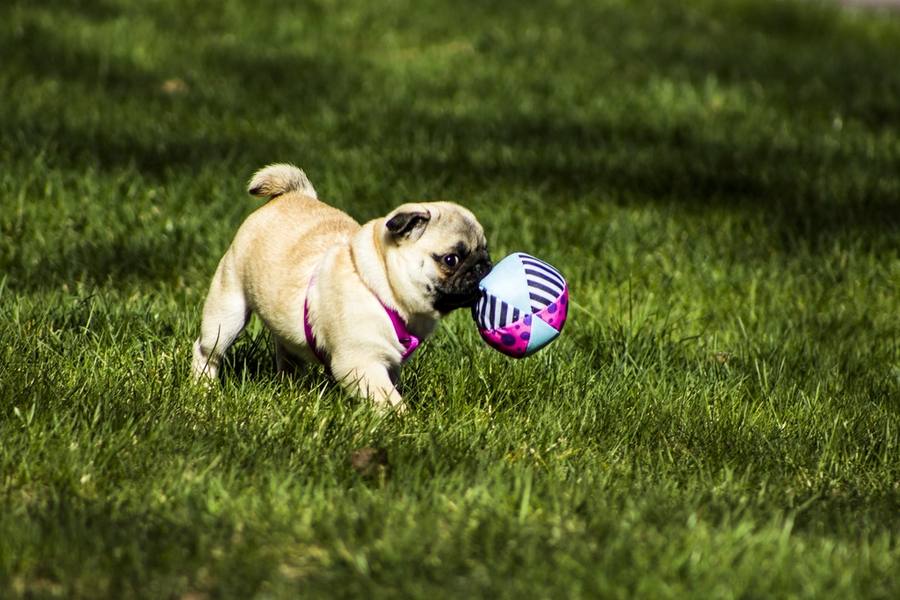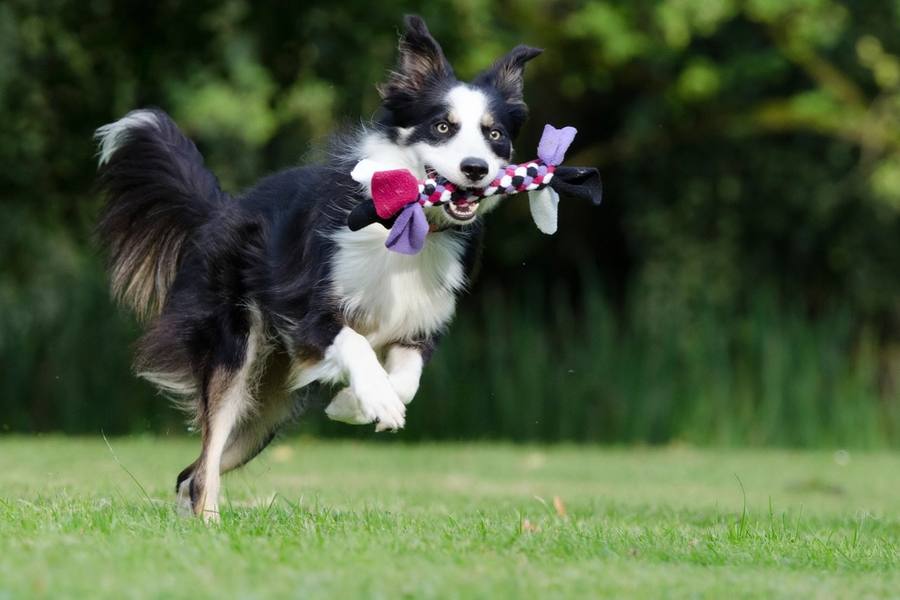
Symbolbild (Stockfoto); nicht das abgebildete Produkt.
Why Not A Tennis Ball
Tennis balls are the default fetch toy and they have two genuine problems. The felt is abrasive and, on a dog that carries and chews a ball constantly, it wears tooth enamel down measurably over years — a well-documented issue among vets who see flattened canines in ball-obsessed dogs.
They also compress and split, and a dog can get half a split tennis ball lodged at the back of the throat, which is a known and serious emergency.
The Ultra Ball is solid rubber with a smooth surface. It does not abrade teeth, it does not split into a throat-blocking shape, and it is considerably more durable.
Bounce, Buoyancy And The Thrower
It bounces high and predictably, which for a dog that likes chasing a bouncing ball is the main attraction.
It floats, which turns river and lake retrieving from a gamble into a reliable game, and is the difference between a ball that comes back and one that is gone.
It is sized and shaped to fit the matching plastic thrower, which extends throwing range enormously without the handler needing to touch a wet ball. That last point is a genuine convenience and part of why the system is so popular.
The Obsessive Fetch Caveat
This is worth raising honestly because the product enables it. Some dogs become genuinely obsessive about fetch, to the point where the behaviour is compulsive rather than play, and repetitive high-speed sprinting with hard stops and turns is hard on joints, particularly in young dogs and heavy breeds.
Long ball-throwing sessions also raise arousal rather than lowering it, so a dog that is worked up may become more so rather than tired and settled.
Moderation and mixing fetch with scent work is the sensible approach, and a ball thrower makes it very easy to overdo. That is not a criticism of the ball, but it is a real consideration for the dog.
Against The Alternatives
Against a tennis ball, the Ultra Ball is better for teeth, safer if chewed, floats, and costs more.
Against a rope toy, the ball is for distance retrieving and the rope for tug and interaction.
Against a snuffle mat or puzzle, fetch raises arousal where scent work lowers it, and a dog that needs settling is better served by the latter.
Who Should Not Buy It
Anyone whose dog is already obsessive about balls should think carefully about whether to make throwing easier and further.
Anyone with a young dog still growing, or a heavy breed prone to joint problems, should limit repetitive high-speed fetch regardless of the ball.
Anyone with a dog that does not chase will get nothing from it.
The Verdict
The right fetch ball: high bouncing, buoyant, thrower-compatible, and free of the enamel wear and splitting risk that tennis balls carry.
It enables very long throwing sessions, which raise arousal and load joints, and that is worth managing deliberately.
Swap out tennis balls for these if your dog carries a ball constantly — the tooth wear argument alone justifies it.
Auf einen Blick
Vorteile
- Smooth rubber does not abrade tooth enamel like tennis felt
- Does not split into a throat-blocking shape
- Floats, making water retrieving reliable
- Fits the matching thrower for long range without handling a wet ball
Nachteile
- Makes it very easy to overdo repetitive high-speed fetch
- Fetch raises arousal rather than settling a dog
- More expensive than tennis balls
- Useless for a dog that does not chase
Häufig gestellte Fragen
Are tennis balls really bad for teeth?
The felt is abrasive, and vets do see flattened canines and worn enamel in dogs that carry and chew tennis balls constantly. For an occasional game it is not a concern; for a ball-obsessed dog it genuinely is, and swapping to smooth rubber addresses it.
Is a lot of fetch bad for my dog?
Repetitive high-speed sprinting with hard stops loads joints, particularly in young or heavy dogs, and long ball sessions raise arousal rather than settling a dog. A thrower makes overdoing it easy, so mixing fetch with scent work is the sensible balance.
Which size should I buy?
Large enough that it cannot pass to the back of the throat — err larger rather than smaller. Sizes are matched to throwers, so if you intend to use one, buy the ball size the thrower takes.
Spezifikationen
| Material | Solid rubber, smooth surface |
| Buoyant | Yes |
| Bounce | High and predictable |
| Thrower compatible | Yes |
| Tooth abrasion | None, unlike tennis felt |
| Split risk | Low |
| Sizes | Several |
| Best for | Retrieving dogs, water work |
Fazit
The fetch ball to use instead of tennis balls: no enamel wear, no split-and-lodge risk, floats, works with a thrower. Just do not let the thrower make you overdo it.
Preis auf Amazon prüfen